
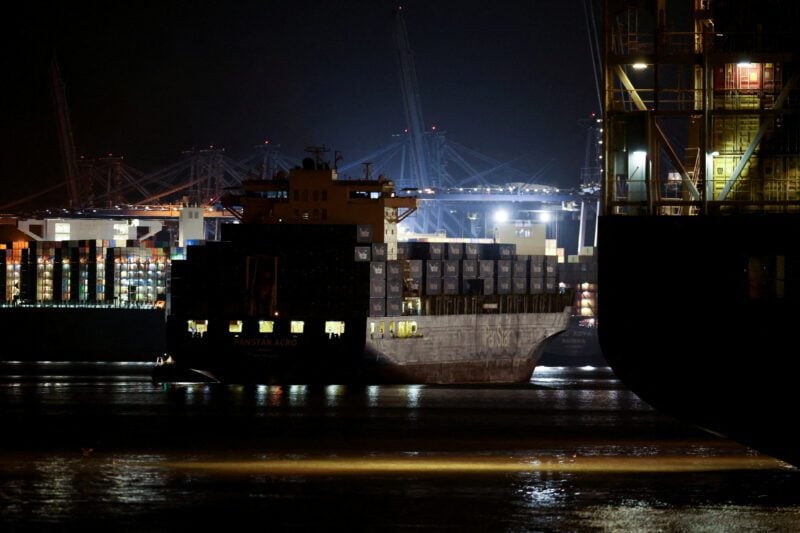
South Korea has completed its first commercial return voyage to Europe through the Arctic, with the container ship PanStar Acro arriving back in Busan on Sunday, according to a Reuters report carried by gCaptain. The vessel returned 50 days after its departure on 22 August, completing a journey that authorities hope will support ambitions to develop Busan into a global maritime hub.
The outward passage took the ship through Arctic waters to Felixstowe, its first European port of call. It subsequently visited Rotterdam and Gdansk before taking the Arctic route home. South Korean authorities say the passage could shorten typical voyage times by roughly a third. Arctic shipping is a priority for President Lee Jae Myung, and officials are aiming to establish regular services by 2030.
Cargo volumes on the trial, however, fell short of the amount sought before departure. PanStar had told Reuters it was looking for about 1,300 twenty-foot equivalent units of cargo, but the vessel sailed with 737 TEU of cargo, alongside empty containers. The completed round trip therefore came with a gap between the cargo volume the company had sought and the volume actually carried at departure.
Commercial viability will depend on more than the prospect of shorter journeys. Industry experts cited in the report identified dependable schedules, the expense of reducing speed to navigate around ice, specialised insurance premiums and additional fuel consumption as factors affecting the route’s value. These considerations sit alongside the government’s timetable for moving towards regular Arctic services.
The initiative also carries diplomatic risks because the passage follows Russia’s Arctic coastline. Seoul consulted Moscow ahead of the voyage, including on whether assistance might be needed if the vessel encountered difficulties such as becoming trapped in ice. According to the report, that engagement could create friction with Western allies seeking to maintain Russia’s isolation over its war in Ukraine.