
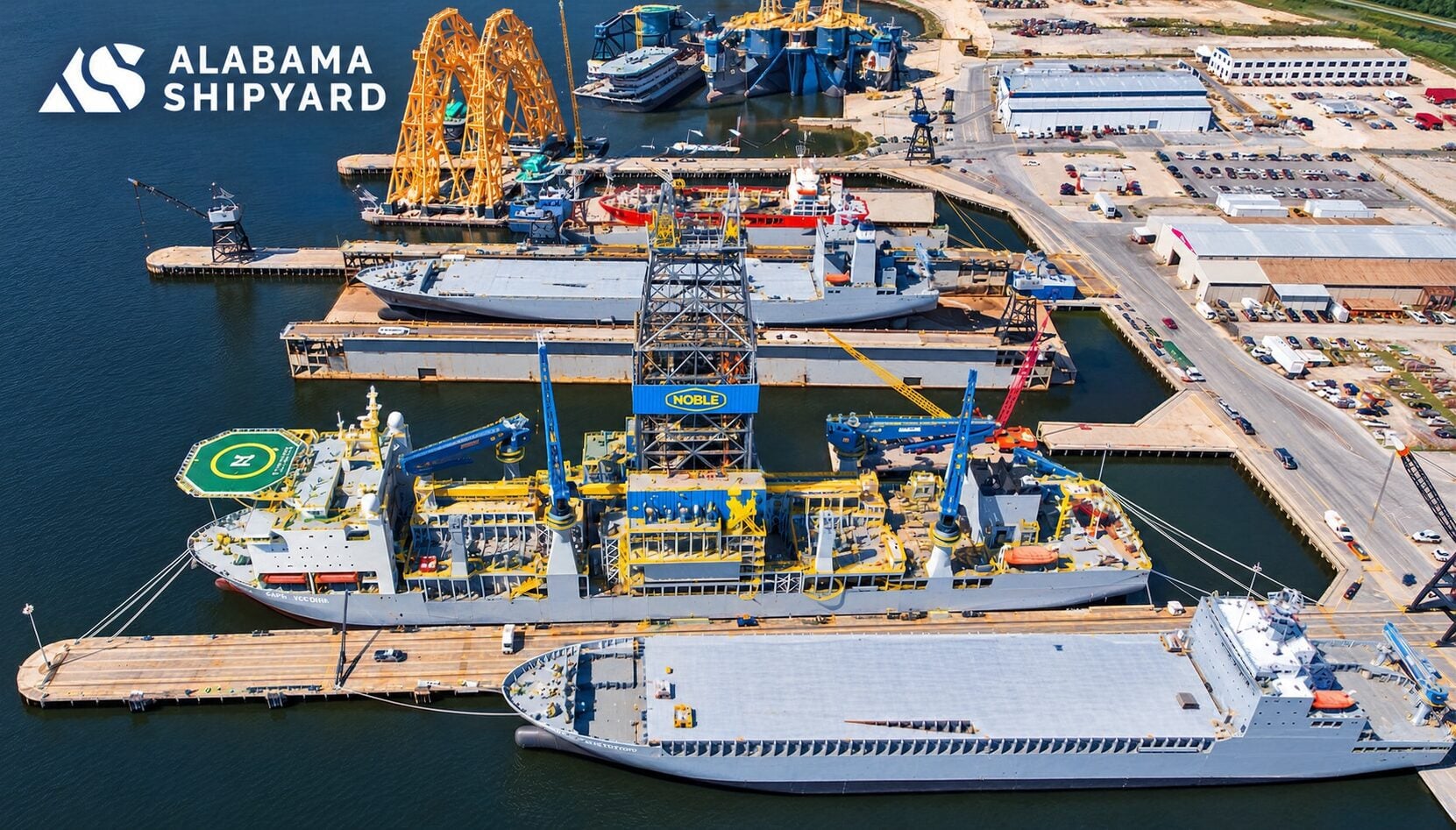
Alabama Shipyard has received the Shipbuilders Council of America (SCA) Excellence in Safety Award for five consecutive years, with its latest award in 2026, according to gCaptain. The full-service ship repair facility in Mobile, Alabama, was also among AEU’s Safety Award recipients in 2022. The report presents workforce protection as central to the yard’s operations, while stressing that everyday conduct matters more than awards or written policies.
Leadership and authority to halt work
The gCaptain report argues that senior managers must set expectations, supply resources and demonstrate that employee safety outweighs schedules, production goals and project demands. Supervisors must reinforce those standards, while workers need management backing to report hazards, question unsafe conditions and use Stop Work Authority without retaliation or pressure to keep production moving. Responsibility, it says, cannot rest with one person or department.
Ship repair combines heavy machinery, welding, fabrication, work at height and in confined spaces, often alongside concurrent activities aboard several vessels. Conditions and project priorities can shift during a working day. Against that backdrop, the report describes visible leadership, regular communication and accountability throughout the organisation as necessary complements to procedures and regulatory compliance.
Planning across crews and contractors
According to gCaptain, effective safety arrangements require continuing coordination between yard personnel, vessel crews, subcontractors and customers. Pre-job briefings, training, routine inspections and job hazard assessments help identify risks before activities start, particularly when different trades work simultaneously or hot work and confined-space tasks require coordination. Precautions must remain part of planning and execution as vessel and worksite conditions change.
The report also links effective safety practices with steadier operations, fewer disruptions, customer confidence and successful delivery of complex repairs and maintenance. It describes Alabama Shipyard’s approach as one of continuous improvement, shared accountability and employees taking responsibility for both themselves and colleagues.
Skills and repair capacity
The report identifies recruiting, developing and retaining skilled people as important to the American maritime industry’s future as domestic repair and maintenance demand evolves. Training must help employees adjust to new technologies, operating requirements and standards, while experienced personnel pass on knowledge and reinforce safe practices. It argues that investment in development and a supportive workplace helps sustain an engaged, capable workforce.
Established in 2018, Alabama Shipyard operates one of the Gulf region’s largest floating dry docks, gCaptain reports. Its deepwater access and extensive waterfront infrastructure support large-scale, complex maintenance, repair, overhaul and conversion (MROC) projects. The yard presents employee protection and professional development as continuing responsibilities across all departments and projects.