
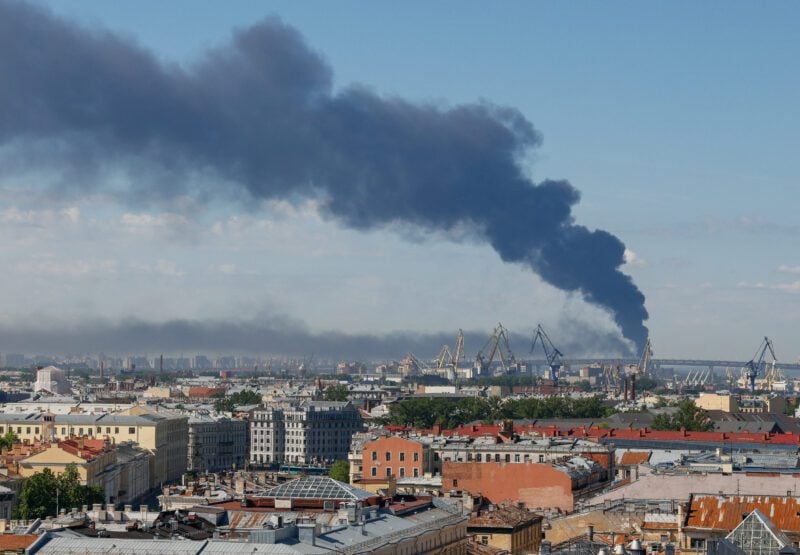
US President Donald Trump said on Sunday, 11 October, that Russia and Ukraine had agreed to an immediate halt to attacks on energy assets, according to a Bloomberg report carried by gCaptain. Trump announced the arrangement on Truth Social without outlining its terms. Ukrainian President Volodymyr Zelenskyy subsequently expressed support for a ceasefire but said Kyiv was waiting for details from Washington and that Russian support was also important.
The announcement followed Zelenskyy’s appearance on ABC’s This Week, where he urged stronger US pressure on Moscow and said Ukraine was prepared to take steps towards de-escalation. He indicated that Ukraine could stop striking Russian diesel facilities if Russia took reciprocal action. Trump had announced an energy ceasefire the previous month, but Zelenskyy later said an agreement had not been finalised. The White House did not answer a request for further information about Sunday’s announcement.
The latest diplomatic move comes alongside disagreement over Trump’s plan to bring Russian diesel onto global markets. According to the report, Trump said last week that shipments totalling about 13.5 million barrels would start this month. The arrangement required a US Treasury waiver lifting sanctions. Citing Energy Information Administration data, the report said the imports would be the first Russian diesel received by the US since March 2022.
Zelenskyy criticised the diesel arrangement as a source of additional resources for Russia’s war effort. Canadian Prime Minister Mark Carney’s office also opposed it following a conversation with the Ukrainian leader. In Washington, four Republican and three Democratic senators argued that allowing Russian diesel imports breached Congress’s prohibition on Russian energy imports. They also said the administration had neither consulted Congress nor supplied the explanation required by law.
For fuel markets, the developments follow restrictions on Russian exports introduced after Ukrainian strikes on refineries and other energy infrastructure. gCaptain’s report said Moscow imposed a temporary ban on exports of most diesel, jet fuel and petrol in July, subsequently extending it through October. Before those restrictions and refinery attacks, Russia supplied about 10% of global seaborne diesel. The loss of those volumes added to disruption affecting Strait of Hormuz flows during the US-Iran war.